Beautiful Soup
Beautiful Soup is a song performed by the Mock Turtle in Chapter X of Alice's Adventures in Wonderland, a parody of the sentimental Victorian ballad "Star of the Evening" that transforms a simple dish into an object of extravagant, tearful longing. The Mock Turtle, who has already introduced himself as a creature of deep sighs and constant sobbing, sings it at the Gryphon's request after Alice has finished reciting her garbled verses. The song is the last piece of entertainment before the trial of the Knave of Hearts interrupts the proceedings, and its refrain, with its drawn-out, almost painful elongation of the word "Soup," becomes one of the most haunting and frequently recalled nonsense lyrics in the book. It functions as a concentrated expression of the Mock Turtle's character—a being defined by a maudlin nostalgia for a past that never was—and its themes of loss, comfort, and the absurdity of desire resonate through the final chapters and into the dream-world's dissolution.
Lyrics and Structure
The song's lyrics are a direct parody of the era's popular sentimental songs, replacing a romantic or spiritual subject with a bowl of soup. The Mock Turtle sings, "Beautiful Soup, so rich and green, / Waiting in a hot tureen!" and asks, "Who for such dainties would not stoop?" The verses contrast the soup with other foods—"Who cares for fish, / Game, or any other dish?"—declaring that all else is worthless compared to "two p / ennyworth only of beautiful Soup." The chorus is built around the repeated, elongated cry of "Beau—ootiful Soo—oop!" and "Soo—oop of the e—e—evening," a vocalization that stretches the words into a kind of musical sob. The Gryphon, after the first performance, immediately calls for a "Chorus again!" and the Mock Turtle begins to repeat it, but the repetition is cut short by a distant cry of "The trial's beginning!" The song thus never receives a proper conclusion within the scene, its final notes left hanging in the air.
Performance and Context
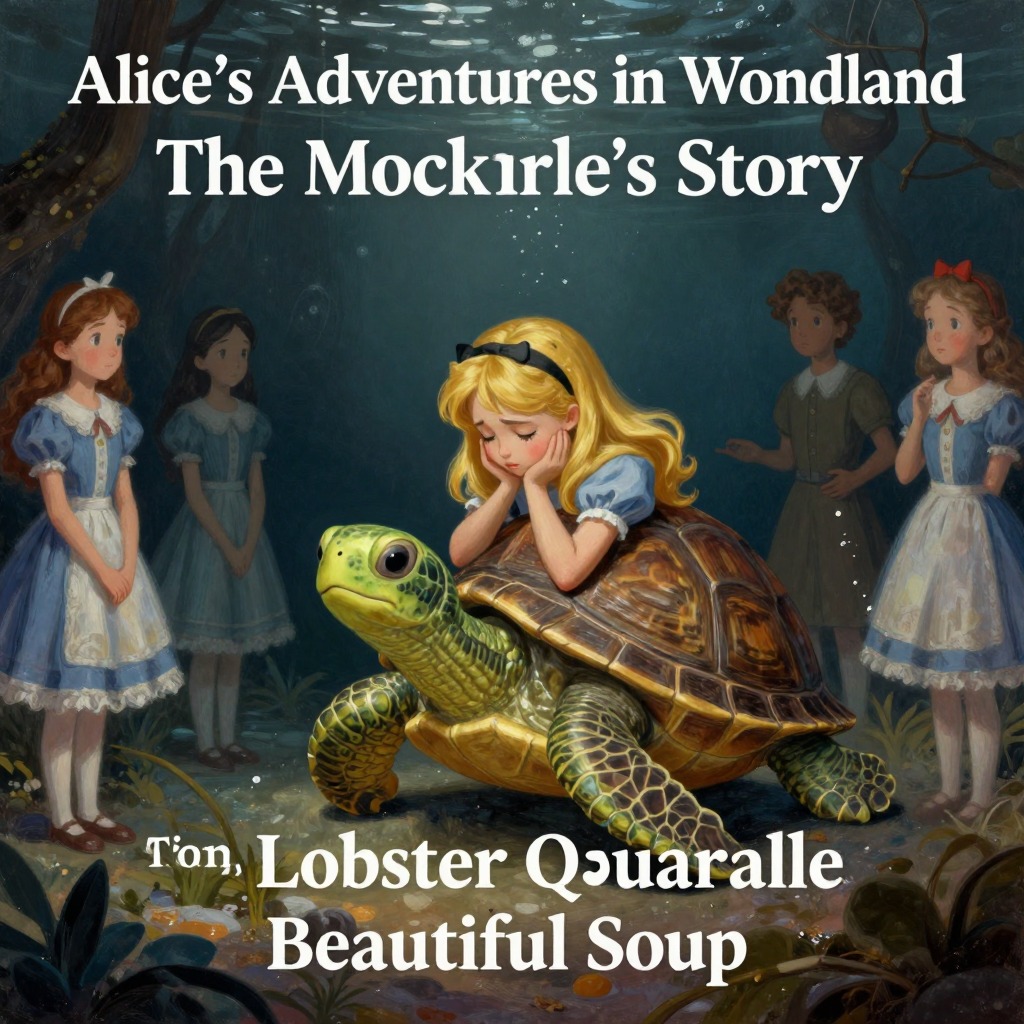
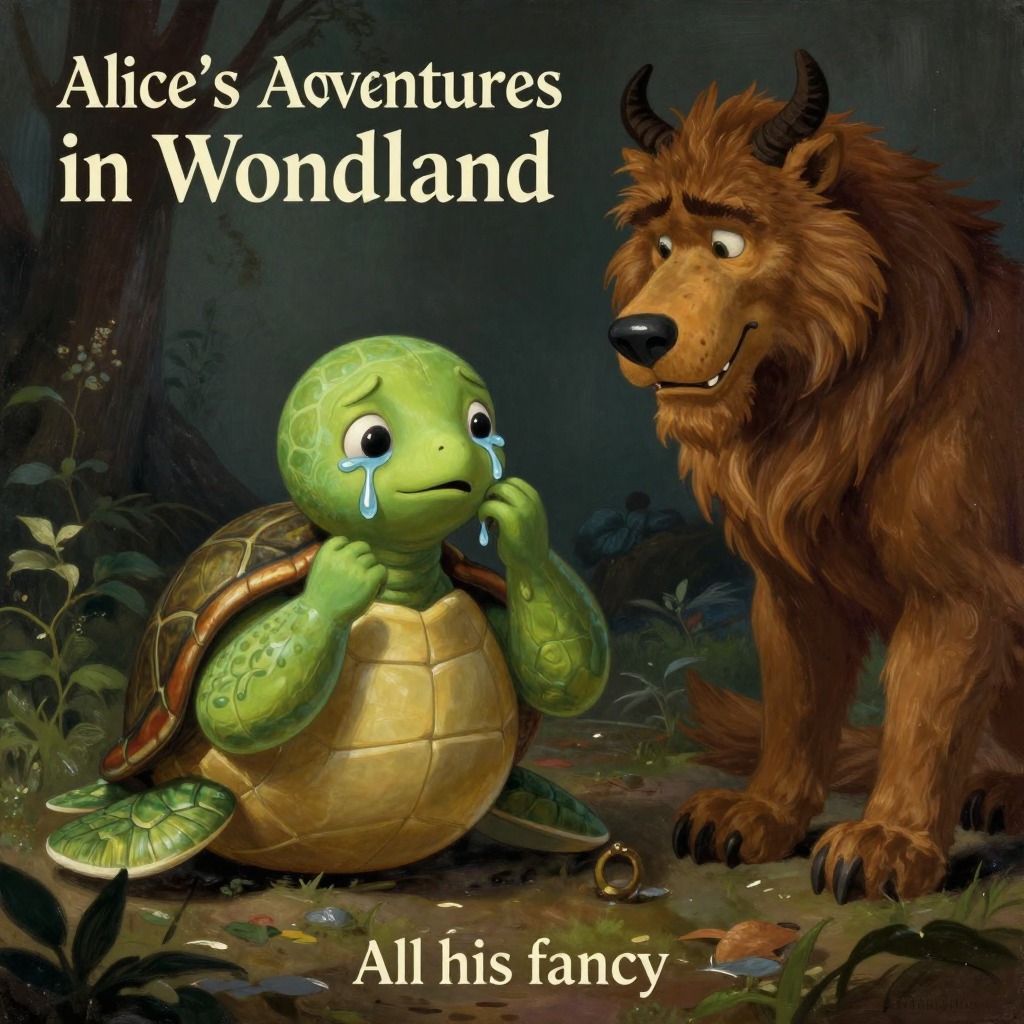
The song is performed in a deeply emotional, almost theatrical manner. The Mock Turtle sighs deeply before beginning, and his voice is "sometimes choked with sobs" as he sings. The Gryphon, who has previously dismissed the Mock Turtle's sorrow as "all his fancy," nevertheless participates by calling for encores. The performance takes place on a little ledge of rock, where the Mock Turtle had been sitting "sad and lonely" before Alice and the Gryphon arrived. The setting is the seashore, after the Lobster Quadrille has been danced and explained, and the mood is one of exhausted melancholy. Alice, who has been a patient but increasingly bewildered audience, listens without comment, and the song's interruption by the trial's summons provides a sudden, jarring shift from the Mock Turtle's self-indulgent grief to the chaotic, life-threatening absurdity of the Queen of Hearts' court.
Thematic Significance and Echoes
Beautiful Soup encapsulates the Wonderland logic of misplaced emotional intensity: the Mock Turtle pours genuine, heartbroken passion into a subject—soup—that is inherently trivial. This is a pattern repeated throughout the book, where characters invest enormous feeling in absurd or meaningless objects, from the Queen of Hearts' obsession with beheading to the Hatter's despair over his broken watch. The song's focus on a comforting, domestic food also contrasts sharply with the violent, unpredictable world of the croquet ground and the courtroom, where the Queen orders executions with every breath. The song's lingering power is confirmed in the book's final chapter, when Alice's sister, left alone on the bank after Alice has woken, begins to dream of Wonderland. In her dream, she hears "the distant sobs of the miserable Mock Turtle" and imagines that, in the real world, the Mock Turtle's "heavy sobs" would be replaced by "the lowing of the cattle in the distance." The song's refrain is thus woven into the very fabric of the dream's dissolution, its melancholy sound becoming one of the last echoes of Wonderland before it fades into the ordinary noises of the farmyard. The song's title and its central image—a beautiful, green soup that is both desired and lost—serve as a perfect emblem for the Mock Turtle's entire character: a creature who mourns a past that never existed, and who finds in a bowl of soup the only beauty he can articulate.